
I enjoy my subscription to The Economist for a couple of reasons. First, it’s a way to get news in print still, and there are a reduced number of options for this in a place like Bend, Oregon. Second, it’s nice to get a more global perspective on what’s going on, instead of just reading about things that involve the U.S. in some way. Plus, they are just so darned clever with the article titles and subtitles.
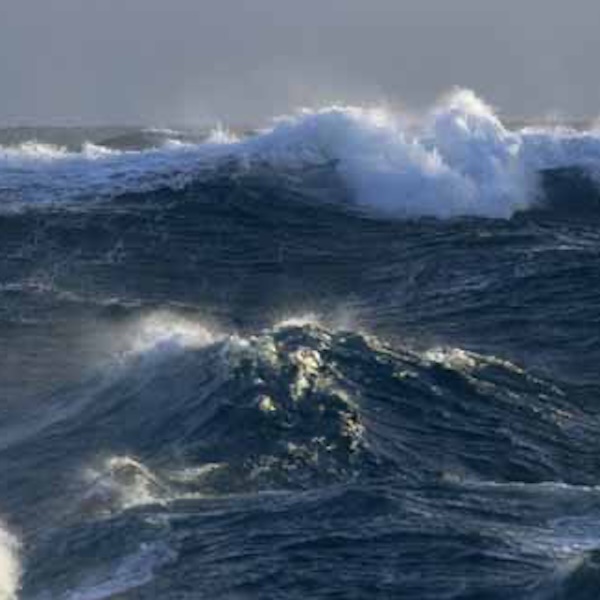
In the Christmas edition of the Economist, there was a fascinating article (free trial required) titled The Black Stream that had nothing really to do with 2025, or any of the events that we’ve already heard about. It turns out that The Black Stream (Kuroshio in Japanese) is a huge ocean current that carries more water than the Amazon river. It is formed by a combination of the surface winds, the Coriolis effect from the Earth’s rotation, and the subtle slope of the water’s surface, impacted by the underwater topography. The Black Stream has transported nutrients that support fisheries, and played a part in shaping societies along its path. The darkness of The Black Stream comes from its clarity. Because there are no particles of plankton or sediment at the surface, the water absorbs light rather than reflecting it.
There’s all sorts of interesting history and information in the article, but I was particularly struck by one thing. In spite of the lack of plankton in the surface waters, The Black Stream sustains rich fisheries, maybe due to periodic upwelling of the current from deeper levels rich in nutrients. One of the recipients of this for centuries are the Tao people living on Orchid Island, off the south-east coast of Taiwan. The Tao’s life and culture revolve around the flying fish, including the elaborate wooden boats they use to catch them.
Everything in their culture relates to the flying fish (can you imagine the recipes?). Here’s the part that caught my attention; the Tao divide the year into three seasons instead of our four. The three seasons translate as “the flying fish season”, “the end of the flying fish season” and “the waiting for the flying fish season.” Even more intriguing to me, instead of the standard four cardinal directions of north, south, east and west, their language only has words for two directions – out to sea and returning to land.
As an outdoor adventurer, and civil engineer, I’m used to operating with four directions and specific bearings. Sometimes in life it seems like we’re pulled in a LOT of different directions. Even when I’m going in one “direction”, I tend to worry about the other directions that I’m NOT going in. Like I’m working on a book, but I’m not going to the gym, for instance. Maybe for 2026 I just need to simplify to two directions. Instead of “out to sea” and “returning to land”, maybe it’s “growing” and “resting”. Just like you can’t go out to sea unless at some point you return to land, it’s impossible to be constantly growing, without taking the time to rest, restore, maybe lock in the new skills or attitudes, before going back to growing.
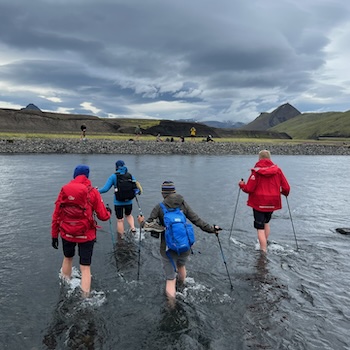
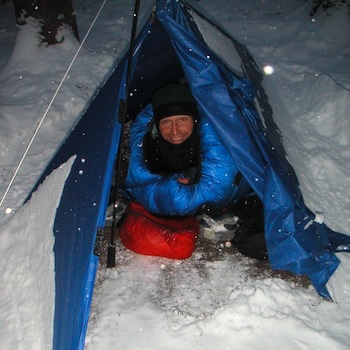
I guess in some ways it’s like a thru hike on a long trail. There’s only one trail, you’re headed in one direction, and you’re either moving, or resting so you can move again the next day. I’m wishing you a 2026 filled with steady progress, and plenty of rest and restoration, with some of both occurring outside.

What an enlightening perspective on seasons in our lives of personal growth vs time to practice the personal growth – especially in the outdoors!
The time between the growth can be as important as the growth…